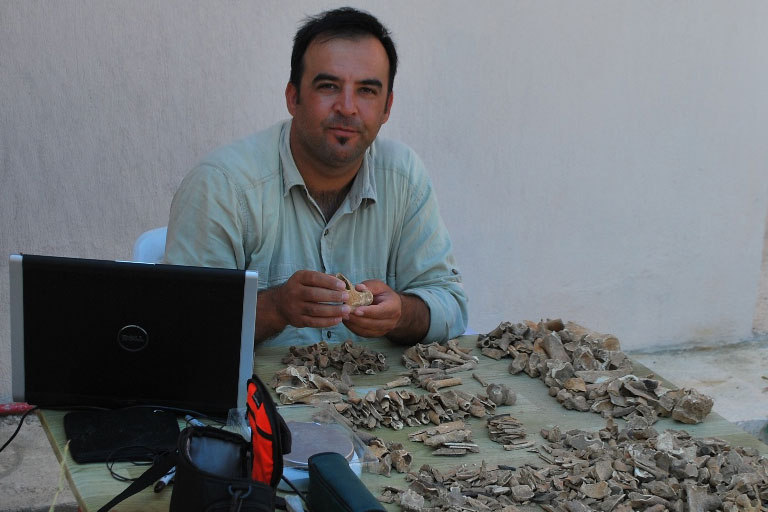
The lab focuses on researching various social and economic characteristics of the Neolithic Revolution and their reflections on animal exploitation strategies. Toward this end, Dr. Atici has conducted faunal analysis at PPNA Körtik Tepe near Diyarbakir, Southeast Turkey. He also explores the spread of emerging Neolithic economies with domesticated animals and plants into Europe using faunal assemblages from Uğurlu Höyük, an early Neolithic site on the Turkish island of Gökçeada in the Aegean Sea.
The lab hosts artifacts from complementary research at two Central Anatolian Bronze Age sites: Kültepe/Kanesh and Kaman-Kalehöyük — a major Assyrian Trade Colony center and a small village site, respectively. Combining the results of research from these two sites, Dr. Atici seeks to illuminate the social and economic characteristics of the Central Anatolian Bronze Age through developing a picture of the exploitation of animal resources and providing insight into the roles played by different levels of socioeconomic and political organization, such as small villages and urban centers.
The study of animal bones has not yet been employed to any great degree to investigate the socioeconomic foundations of the central Anatolian Bronze Age. Thus, this research will contribute to the archaeology of Turkey and the Near East by approaching an important archaeological question from a new perspective, that of zooarchaeology.